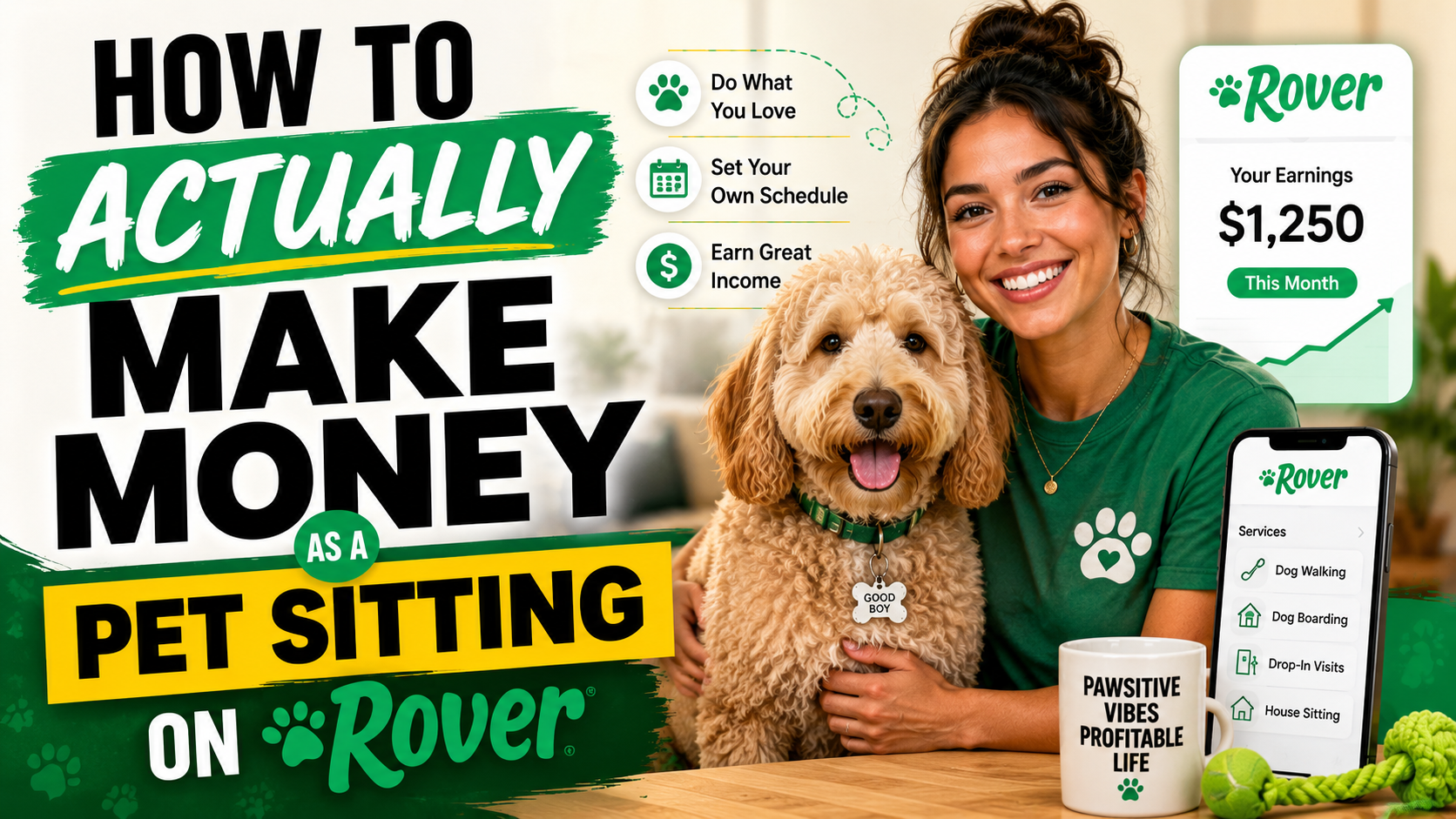
Pet sitting is one of the few ways to make money online that doesn't require a portfolio, a niche, or years of building a reputation from scratch. Apps like Rover have already built the marketplace, the trust system, and the customer base — your job is simply to show up as a reliable option inside it. That's a rare combination in the world of online income: low barrier to entry, real demand, and payouts that start almost immediately.
But "low barrier to entry" doesn't mean "no strategy." Plenty of people sign up for Rover, post a generic profile, and wonder why bookings don't come. The sitters who turn this into real, steady income treat it like a small service business, not a side hustle they'll get around to eventually. Here's how to actually make it work.
What Pet Sitting on Rover Actually Involves
Rover isn't a single job — it's a platform with several service types, and understanding them helps you figure out where you can earn the most based on your situation:
- Boarding — the dog stays overnight at your home, typically the highest-paying service per booking
- House sitting — you stay at the owner's home while they're away, caring for pets in their own environment
- Dog walking — shorter, more frequent bookings, good for filling gaps between longer jobs
- Drop-in visits — brief check-ins for feeding, bathroom breaks, and companionship, usually for cats or pets that don't need full-day care
- Doggy day care — daytime-only care at your home while the owner is at work
Most successful sitters don't offer just one service — they build a mix, with boarding and house sitting as their highest earners and walks or drop-ins filling in lower-effort income between bookings.
Step 1: Set Yourself Up to Actually Get Booked
Before you can earn anything, you need a profile that makes a stranger comfortable trusting you with their pet. This is the step most new sitters rush through, and it's the reason their calendar stays empty.
- Complete every section of your profile — bio, experience, home environment, availability — incomplete profiles rank lower and convert worse
- Add real photos, not stock images — photos of your home, your yard, and (with permission) pets you've cared for build far more trust than generic pictures
- Write a specific bio, not a vague one — mention real experience (owning pets, working at a shelter, growing up with animals), your daily routine, and what a stay at your place actually looks like
- List your home environment honestly — fenced yard, other pets, kids, apartment vs. house — this isn't just transparency, it also helps the algorithm match you with the right clients
- Get your background check done immediately — Rover requires this, and profiles without it are effectively invisible to serious bookers
New sitters with zero reviews are competing against sitters with dozens of five-star ratings, so your profile has to work harder to earn that first booking.
Step 2: Price Strategically, Not Randomly
Pricing on Rover is a balancing act between staying competitive early on and not undervaluing your time long-term.
- Check what sitters with strong reviews in your area charge for each service type, and price close to that range rather than drastically underpricing — extremely cheap rates can actually make new sitters look inexperienced or desperate
- Consider slightly lower pricing only for your first several bookings, specifically to build reviews faster, then raise rates once you have a track record
- Price boarding and house sitting higher than walks and drop-ins — they require far more time and responsibility, and should be treated as your core income, not your side offering
- Use Rover's add-on options (extra dogs, longer walks, additional visits) to increase your per-booking revenue without needing more clients
- Raise your rates periodically once you have strong reviews — returning clients rarely leave over a reasonable increase, and new clients will simply see your current rate as normal
Step 3: Get Your First Reviews as Fast as Possible
Reviews are the single biggest factor in whether new clients choose you over a more established sitter. Until you have several, you're mostly invisible in a crowded marketplace.
- Say yes to smaller, lower-effort jobs early on — a single drop-in visit is a much faster way to earn your first review than waiting for a week-long boarding request
- Ask friends and family with pets if you can do a trial stay or walk, if Rover's policies allow it in your area, to build initial experience and photos even before your first paid booking
- Follow up warmly after every booking, asking for a review specifically, since happy clients often simply forget unless prompted
- Deliver small, unprompted extras — a photo update mid-walk, a short note about how the visit went — these tiny touches are what turn a decent review into a glowing, detailed one that actually convinces future clients
Step 4: Build Repeat Clients, Not Just One-Off Bookings
The real money in pet sitting isn't in constantly chasing new clients — it's in becoming someone's regular sitter. Repeat clients require zero marketing effort and tend to book further in advance, which makes your income far more predictable.
- Treat every first booking like an audition for a long-term relationship, not a one-time transaction
- Remember details — the pet's routine, quirks, favorite toy — and reference them naturally in your updates; owners notice this immediately
- Proactively reach out before major travel seasons (holidays, summer) to previous clients, since Rover sitters get booked out fast during peak periods and a quick check-in often locks in repeat business before they even start searching
- Offer a small loyalty perk for repeat clients, like a discount after a certain number of bookings, which costs you very little but strongly increases retention
A handful of loyal repeat clients booking regularly is worth far more over a year than a constant churn of first-timers.
Step 5: Expand Your Capacity Without Burning Out
Once you have steady demand, the natural next question is how to earn more without simply working every hour of every day.
- Raise your rates instead of just taking more bookings — this is the simplest lever, and it rewards you for experience rather than volume
- Offer multiple pets per booking — Rover's per-additional-pet pricing means a two-dog household often pays significantly more for barely more effort than a single dog
- Add higher-margin services like daily photo/video updates, specialized care (medication administration, senior pet care), or extended stays during peak seasons
- Be selective about overlapping bookings, especially for boarding, since managing multiple dogs at once (with owner permission) can multiply income from the same block of time
- Consider expanding beyond Rover once you have a strong reputation, using platforms like Wag or building a direct client base that books with you outside the app entirely, avoiding platform fees on repeat business
The Realistic Timeline
- Weeks 1–4: profile setup, background check, first low-effort bookings to build initial reviews
- Months 2–4: steady flow of bookings, first repeat clients, rates starting to reflect experience
- Months 5–12: recognizable reputation in your area, calendar filling from repeat and referral bookings, rates well above your starting point
- Year 1+: peak-season bookings largely pre-filled by returning clients, income predictable enough to plan around
Final Thought
Pet sitting through Rover rewards reliability and warmth more than any special skill or credential. Set up a profile that earns trust, price with intention instead of guessing, chase your first reviews aggressively, and focus on turning one-time bookings into repeat relationships. It won't make you rich overnight, but for consistent, flexible income with almost no startup cost, it's one of the most dependable ways to make money online — one wagging tail at a time.



0 Comments
Leave a comment